The Cloud Practitioner exam rewards category awareness. You should recognize what a service does, when it is appropriate, and which nearby service solves a different problem.
Compute
- EC2: resizable virtual machines. You manage the guest operating system.
- Lambda: event-driven function execution without server management.
- ECS: container orchestration with AWS-native control planes.
- EKS: managed Kubernetes control plane.
- Fargate: serverless compute capacity for ECS tasks and EKS pods.
- Elastic Beanstalk: application deployment platform that provisions underlying AWS resources.
Memory cue: EC2 is a machine, Lambda is an invocation, and Fargate is managed container capacity.
Storage
- S3: regional object storage for files, backups, static assets, and data lakes.
- EBS: block volumes commonly attached to EC2 in one Availability Zone.
- EFS: managed shared NFS filesystem for Linux clients.
- S3 Glacier storage classes: lower-cost archival access patterns inside S3.
- Storage Gateway: hybrid access between on-premises environments and AWS storage.
Read the S3 vs EBS vs EFS guide for the full comparison.
Databases and analytics
- RDS: managed relational engines.
- Aurora: AWS relational engine compatible with MySQL and PostgreSQL.
- DynamoDB: managed key-value and document database.
- ElastiCache: managed in-memory caching.
- Redshift: cloud data warehouse for analytics.
- Athena: serverless SQL queries over data in S3.
- Glue: managed data integration and catalog capabilities.
Memory cue: RDS is relational, DynamoDB is NoSQL request access, Redshift is analytical warehousing, and ElastiCache accelerates other stores.
Networking and delivery
- VPC: isolated network boundary.
- Route 53: DNS and traffic routing.
- CloudFront: content delivery network.
- Elastic Load Balancing: distributes traffic to healthy targets.
- API Gateway: managed API front door.
- Direct Connect: dedicated network connection to AWS.
- Site-to-Site VPN: encrypted network tunnel over the internet.
Security and governance
- IAM: permissions for identities and workloads.
- KMS: managed encryption keys.
- Secrets Manager: secret storage and rotation workflows.
- WAF: web request filtering for supported Layer 7 resources.
- Shield: DDoS protection service family.
- GuardDuty: threat detection from AWS data sources.
- Inspector: automated vulnerability management for supported workloads.
- Security Hub: security findings aggregation and posture management.
- Artifact: on-demand AWS compliance reports and agreements.
Monitoring and deployment
- CloudWatch: metrics, logs, alarms, and dashboards.
- CloudTrail: AWS API activity and audit history.
- Config: resource configuration history and rule evaluation.
- CloudFormation: infrastructure as code for AWS resources.
- Systems Manager: fleet and operational management.
- Trusted Advisor: checks and recommendations across supported categories and support access levels.
Cost tools
- Pricing Calculator: estimate planned architecture cost.
- Cost Explorer: analyze historical and forecast cost.
- AWS Budgets: alert on cost, usage, reservation, and Savings Plans thresholds.
- Cost and Usage Report: detailed billing data for analysis.
- Organizations: multi-account governance and consolidated billing.
Learn through diagrams
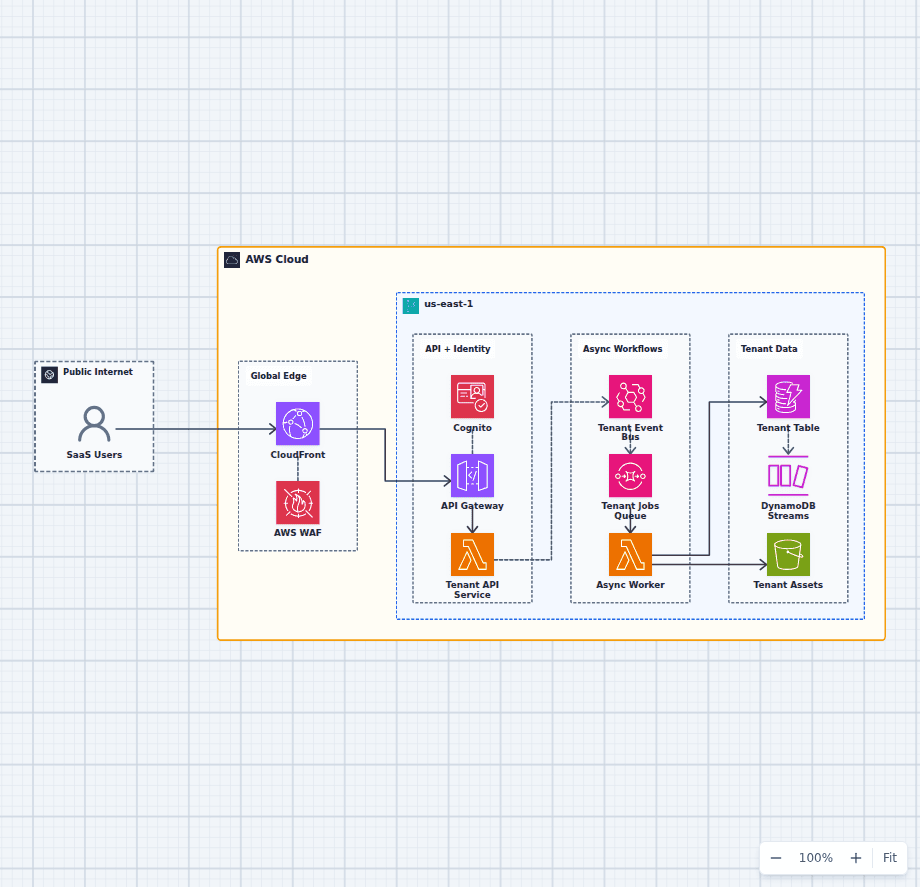
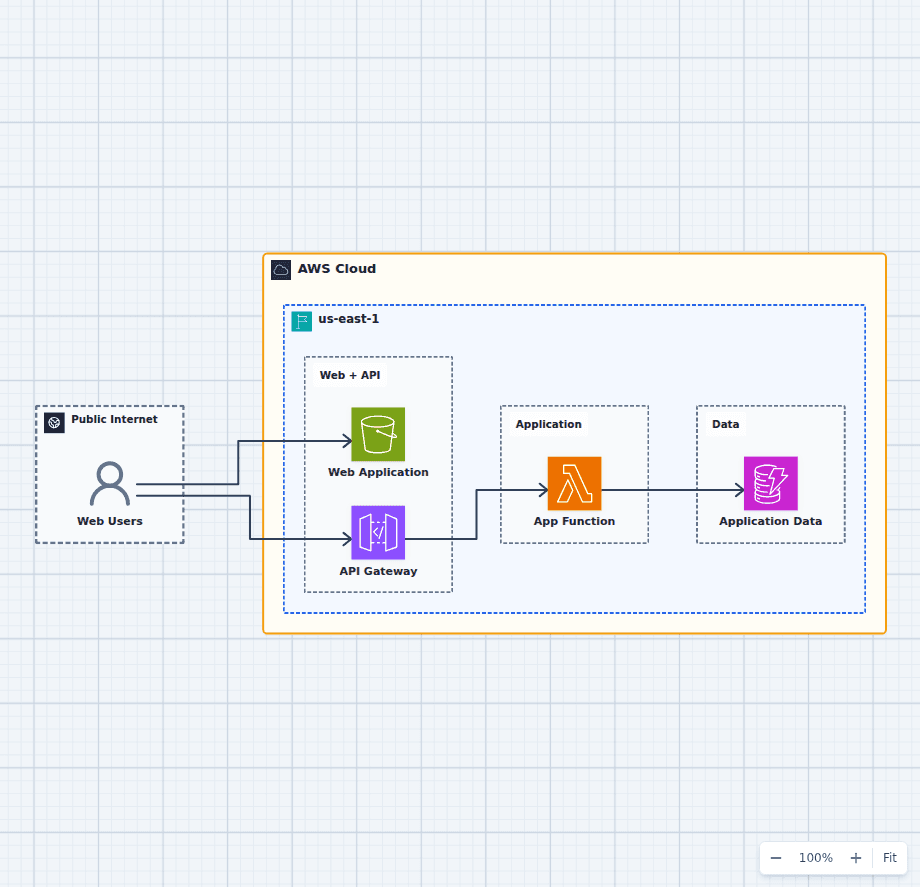
Trace the serverless REST API, highly available web app, and cost-conscious startup. For each service, name the category, customer responsibility, scaling model, and likely billing dimension.
That exercise converts a cheat sheet into durable understanding.