

The AWS Certified Cloud Practitioner exam checks broad cloud understanding rather than deep implementation skill. The current CLF-C02 guide organizes scored content into Cloud Concepts, Security and Compliance, Cloud Technology and Services, and Billing, Pricing, and Support.
Before studying, read the official CLF-C02 exam guide. AWS can change exam details, so treat the official guide as the source of truth.
Week 1: Build the cloud mental model
Learn Regions, Availability Zones, edge locations, elasticity, scalability, high availability, fault tolerance, and the shared responsibility model. Be able to explain why a company might move from owned servers to consumption-based cloud services without claiming that cloud is always cheaper.
Study the six AWS Well-Architected pillars at a high level. Understand that architecture choices balance operational excellence, security, reliability, performance efficiency, cost optimization, and sustainability.
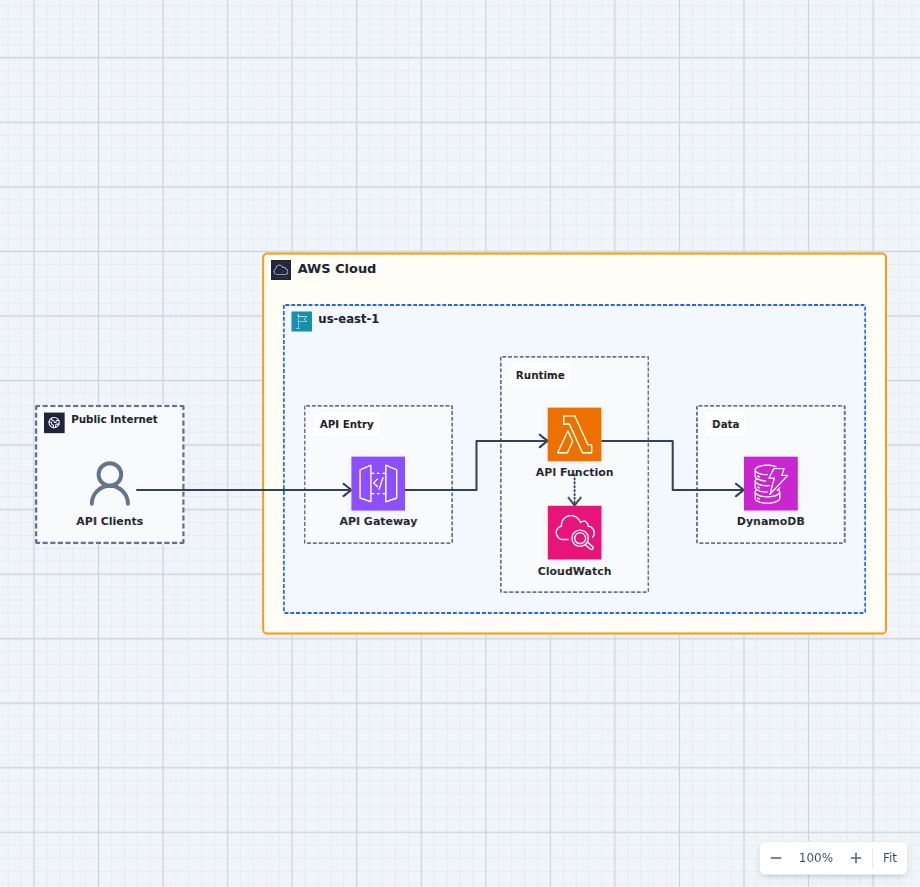
Open the Availability Zone failure architecture. Explain why two zones matter and what still fails if the whole Region is unavailable.
Week 2: Learn core services by category
Build a one-sentence definition and one common use case for each core service:
- Compute: EC2, Lambda, ECS, EKS, Elastic Beanstalk
- Storage: S3, EBS, EFS, S3 Glacier storage classes
- Database: RDS, Aurora, DynamoDB, ElastiCache, Redshift
- Networking: VPC, Route 53, CloudFront, Elastic Load Balancing, Direct Connect, VPN
- Integration: SQS, SNS, EventBridge, Step Functions
- Management: CloudWatch, CloudTrail, Config, CloudFormation, Systems Manager
Do not memorize every feature. Learn the category and the decision that separates neighboring services. The top 10 AWS services guide is a compact first pass.
Week 3: Focus on security and billing
Security and Compliance is a large exam domain. Know IAM users, groups, roles, policies, least privilege, MFA, AWS Artifact, GuardDuty, Inspector, Shield, WAF, KMS, Secrets Manager, and the difference between CloudTrail and CloudWatch.
For billing, understand On-Demand, Savings Plans, Reserved Instances, Spot, AWS Budgets, Cost Explorer, Pricing Calculator, Organizations consolidated billing, tagging, and AWS Support plan concepts. Learn which tools estimate future cost, analyze past cost, and alert on thresholds.
Week 4: Practice scenarios and close gaps
Answer scenario questions without looking at notes. For every wrong answer, write why your choice was attractive and what requirement ruled it out. This turns mistakes into decision rules.
Use the Cloud Practitioner scenario questions and the official practice resources linked from AWS Certification. Revisit only weak categories during the final days.
Daily rhythm
Spend 30 to 60 minutes on one concept, 15 minutes on recall, and 15 minutes tracing an architecture. Even a small free-tier lab helps: create a budget, browse CloudTrail history, upload an object to S3, and inspect an EC2 launch form without leaving resources running.
Exam-day mindset
Read the final sentence first because it usually contains the actual requirement. Watch for phrases such as lowest operational effort, most cost-effective, highly available, or least privilege. Eliminate answers that solve a different problem.
Cloud Practitioner is not a trivia contest. If you can explain which service fits a common need, who manages each layer, and how cost and security are governed, you are learning the material at the right depth.