
An internship bridges classroom learning and real engineering work. It is a chance to develop technical judgment, learn how a team communicates, and build professional relationships that can last for years.
The best interns are not the people who pretend to know everything. They are the people who learn quickly, make progress visible, and improve the work around them.
Adopt a growth mindset
Expect unfamiliar code, tools, meetings, and terminology. Treat mistakes as information. Ask for feedback early, while there is still time to use it, and show what you changed because of it.
A helpful question is: "What is one thing I could do differently next week that would make me more effective?" It invites specific advice without asking a mentor to summarize your entire performance.
Understand the problem before the ticket
Learn who uses the system, what the team owns, how success is measured, and what can go wrong. Read the architecture docs and recent incident reports. Trace one request from entry point to data store.
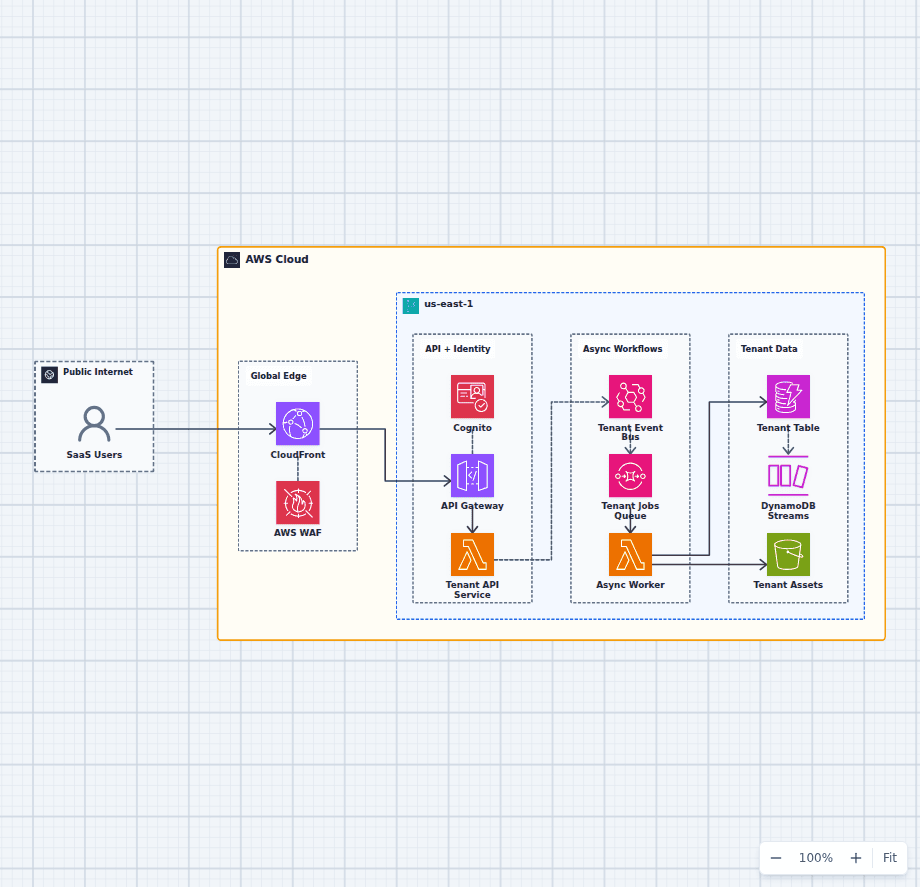
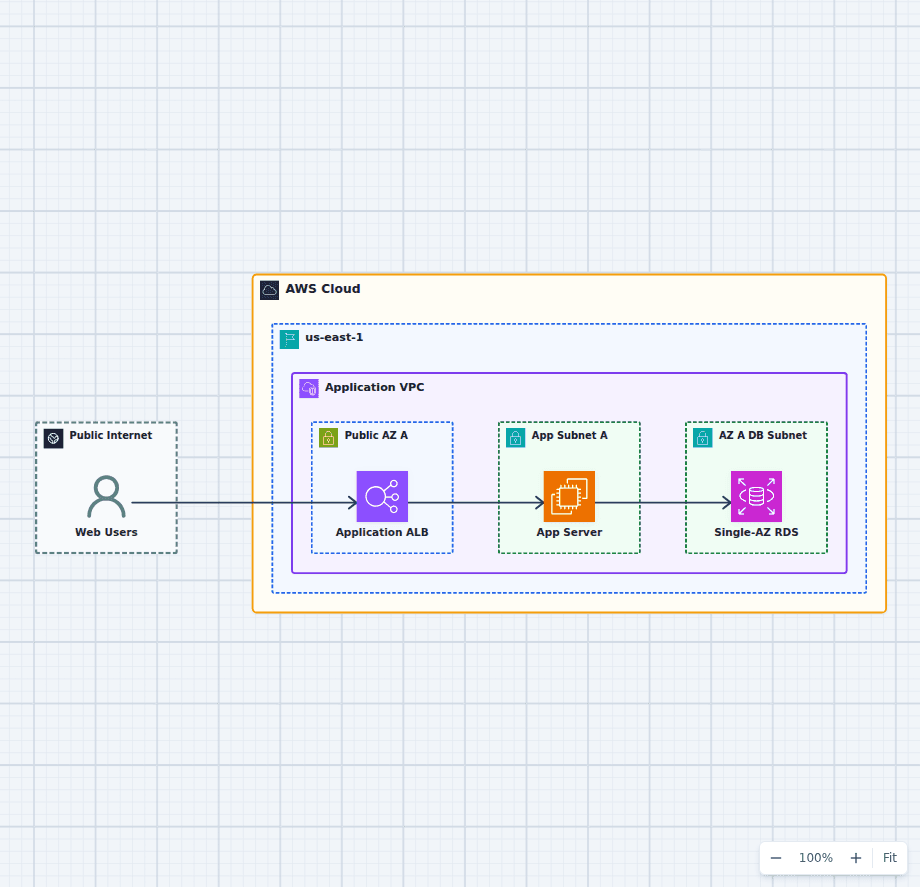
If the team works on AWS, open a relevant diagram and identify the service and ownership boundaries. The single-AZ architecture review is a useful practice exercise. Find the risks, then explain them without turning the review into a list of fashionable services.
Use mentorship well
When you get stuck, spend a reasonable amount of time narrowing the problem. Bring the error, what you tried, what changed, and the smallest question you can ask. That shows independence while respecting the mentor's time.
Shadow design reviews, code reviews, operational meetings, and deployments. Write down unfamiliar terms and follow up after the meeting instead of interrupting every thread.
Document what you learn
Keep a short working log with decisions, commands, links, and open questions. Improve a stale setup guide after you experience the setup yourself. Write a clear pull request description that explains the user problem, design choice, and verification.
Documentation is not secondary work. It is how your learning continues to help the team after the internship ends.
Manage time and scope
Break the project into reviewable pieces. Agree on a minimal successful outcome early, then add stretch goals. Raise risk before a deadline rather than arriving with a surprise.
Use weekly check-ins to confirm that your priority still matches the team's. Real product work changes, and adapting is part of engineering.
Get comfortable with ambiguity
Write down what you know, what you assume, what you need to discover, and which experiment can answer the next question. Ambiguity becomes manageable when it is split into testable unknowns.
Build relationships beyond the project
Talk with engineers in adjacent roles such as operations, security, data, product, and support. Ask what makes collaboration easy and where handoffs usually fail. Those conversations reveal how software lives after it leaves a developer's laptop.
Deliver and reflect
At the end, summarize the problem, your contribution, key decisions, verification, measurable result, and what you would do next. Thank the people who helped. Ask whether you can stay in touch.
If AWS is part of your internship, the Cloud Practitioner study guide can organize foundational learning, while the architecture library gives you concrete systems to discuss with a mentor.
A successful internship leaves you with more than a finished ticket. It leaves you better at learning, communicating, and turning unclear problems into dependable work.