Technology job listings sometimes mention Secret, Top Secret, TS/SCI, a polygraph, public trust, or an ability to work in AWS GovCloud (US). Those phrases describe different eligibility, access, and platform requirements. They should not be treated as synonyms.
This overview is educational, not legal or clearance advice. For a specific role, follow the employer's security office and current U.S. government guidance.
What is a security clearance?
The U.S. Defense Counterintelligence and Security Agency describes a security clearance as a personnel vetting determination that someone is eligible for access to national security information or national-security-sensitive duties.
Eligibility alone does not create access to every classified system. The person also needs the appropriate level, a need to know, and authorization for the specific information or program.
Common national security eligibility levels are Confidential, Secret, and Top Secret. Some roles also require access determinations such as Sensitive Compartmented Information or Special Access Programs. Job postings should state the actual requirement.
You do not apply for a clearance by yourself
Individuals cannot submit a clearance application on their own. A government agency or cleared employer determines that a position requires access and initiates the process. The process can include a questionnaire such as the SF-86, fingerprints, a background investigation, adjudication, and continuous vetting.
The official DCSA clearance FAQ is the right place to verify the current process. A normal employer background check is not the same as a national security clearance.
Which IT jobs may require one?
The job's data and mission matter more than the title. A cloud engineer, software developer, network engineer, data analyst, or cybersecurity engineer may work entirely on unclassified commercial systems. The same title supporting a classified government program may require a clearance and specific accesses.
Read listings carefully:
- Active clearance required usually means the employer needs someone who can begin cleared work quickly.
- Ability to obtain means the employer may sponsor a selected candidate, subject to eligibility and program needs.
- Public trust refers to a suitability or fitness process for certain positions and is not itself a security clearance.
Where AWS GovCloud fits
AWS GovCloud (US) consists of isolated AWS Regions designed for sensitive and regulated workloads. AWS documents support for programs and requirements including FedRAMP High, ITAR, CJIS, and DoD Cloud Computing SRG impact levels for appropriate customer architectures.
GovCloud eligibility and a personnel security clearance are not the same thing. AWS states that GovCloud account holders must meet U.S. entity and U.S. Person requirements, and account access uses a separate partition and credentials. A particular job can add citizenship, U.S. Person, background investigation, clearance, contract, or data-handling requirements based on the workload.
Working with AWS GovCloud does not automatically mean every engineer needs a security clearance. A clearance is job-based and tied to classified or national-security-sensitive access. Conversely, holding a clearance does not by itself grant access to a company's GovCloud accounts or regulated data.
Review the AWS GovCloud sign-up requirements and AWS GovCloud compliance overview for current platform details.
Architecture skills still matter
GovCloud is not a shortcut around shared responsibility. Teams still design identity, encryption, logging, network boundaries, backup, patching, incident response, and authorization for the applicable framework.
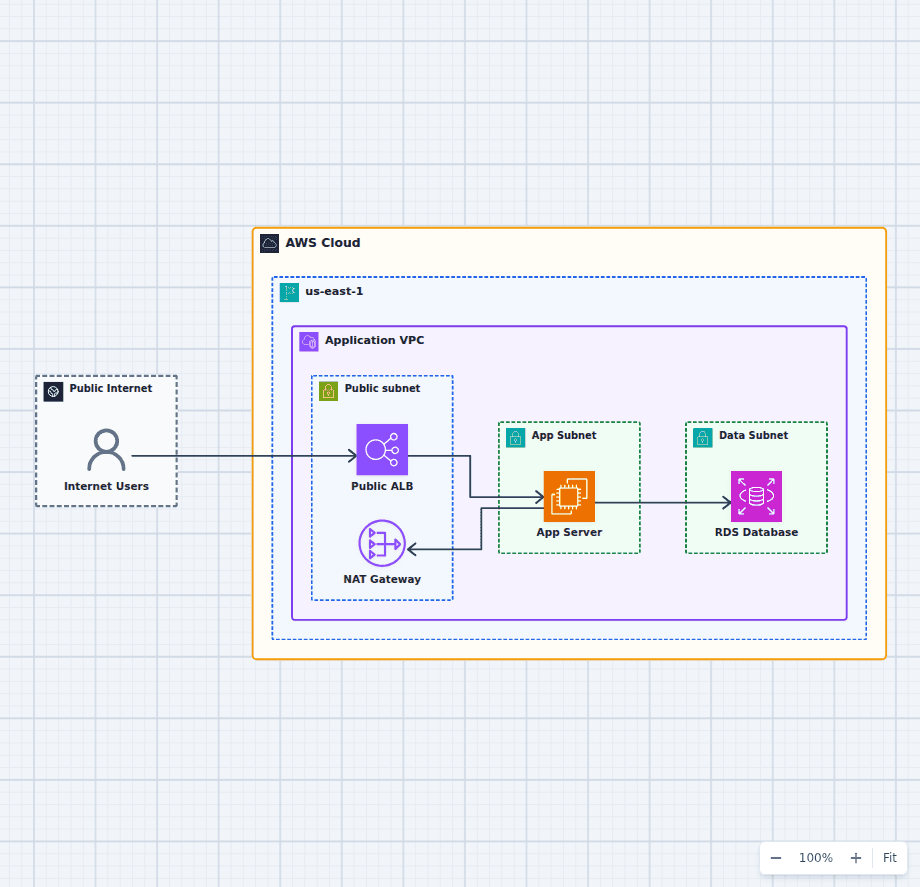
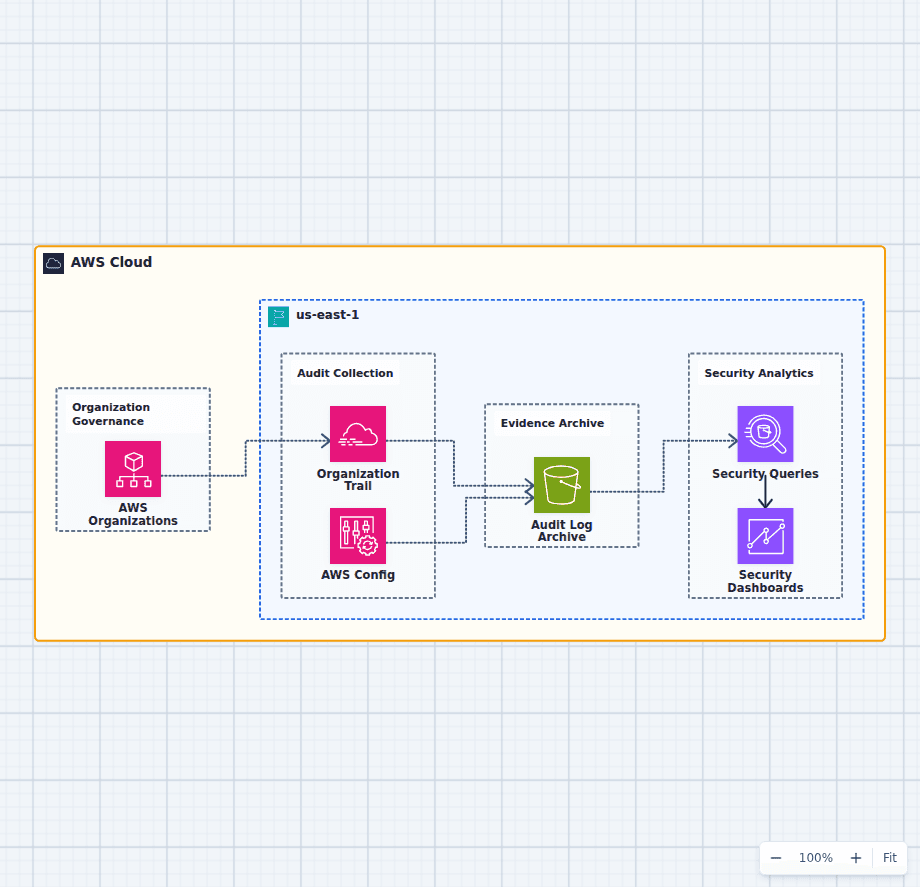
The centralized AWS security logging architecture is useful for reasoning about protected audit evidence. The hybrid Transit Gateway architecture helps explain private connectivity between environments.
Preparing for these roles
Learn the mission and data classification before discussing services. Be ready to explain least privilege, KMS key ownership, CloudTrail, multi-account boundaries, private connectivity, incident evidence, and recovery. Keep your resume accurate about clearance status. If a listing is unclear, ask the recruiter whether the role requires an active clearance, sponsorship eligibility, U.S. Person status, or only experience with regulated AWS environments.
The distinction matters: platform eligibility, employment suitability, personnel clearance, need-to-know, and technical authorization are separate gates.